
The scale
A two-sided marketplace covering 6 disciplines. Every artist profile and every client brief passes through the same discovery layer first.
Konext.
01 About
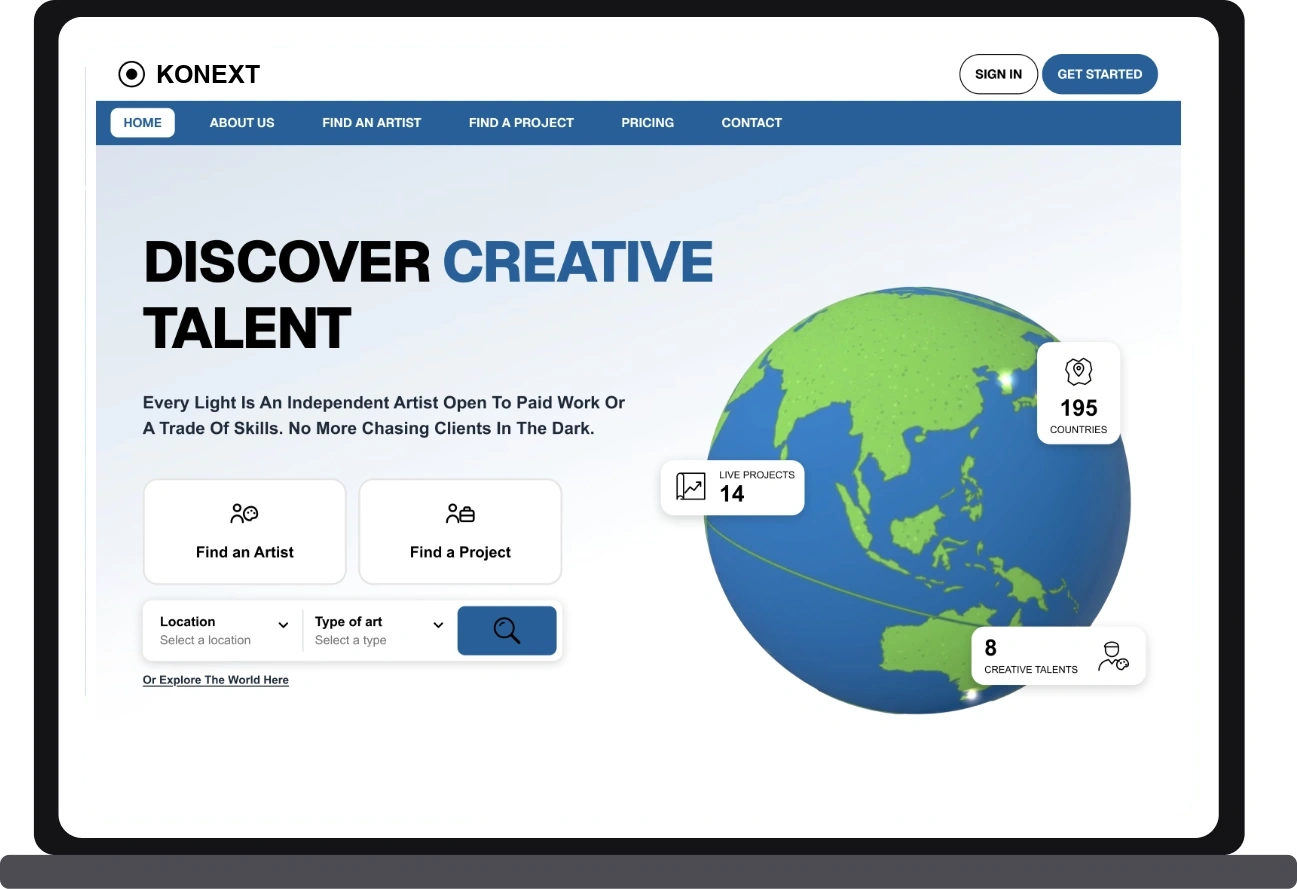
Konext is a marketplace connecting artists with creative opportunities through geographic discovery.

Figma
Cloud based design

Claude
AI assistance

Supabase
Database & backend

HTML · CSS
Structure & styling de l’interface

Vercel
Deployment & hosting

Maze
User testing

Cursor
AI code editor

Node.js
JavaScript runtime
01 Context
This is a case study about a two-sided marketplace, not a single-user tool. To understand why geographic discovery mattered, you need to understand who’s actually looking for whom, and why the usual search bar fails both of them.
A two-sided marketplace covering 6 disciplines. Every artist profile and every client brief passes through the same discovery layer first.

Freelance artists chasing their next paid brief, and the studios and clients trying to find them by style and location not by algorithm luck.
World
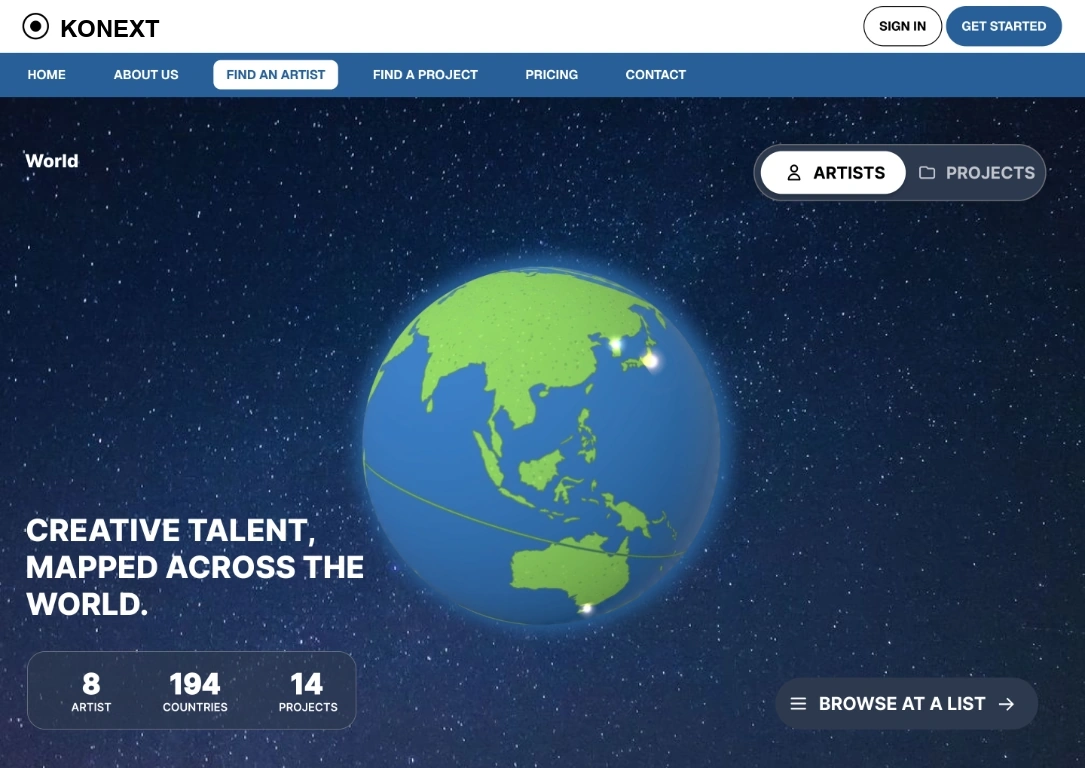
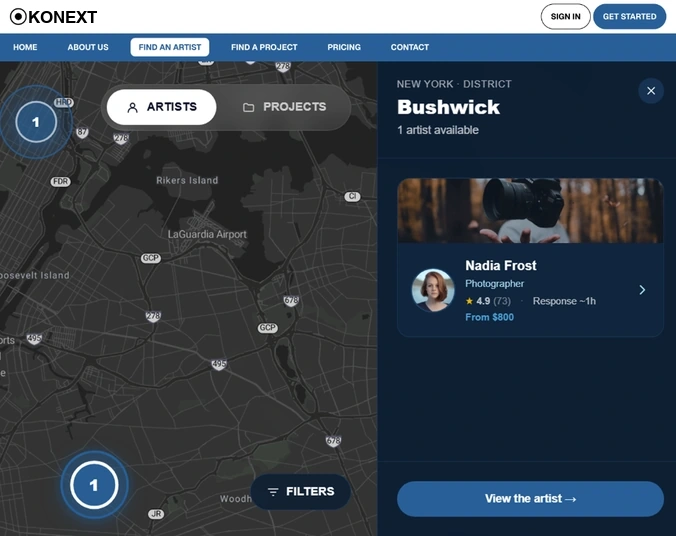
A client or artist opens Konext and lands directly on the live globe: discovery, not a dashboard.


Filter
Discipline, location, and availability narrow the globe down to a real shortlist.
Profile
Verified work history and mutual reviews replace a cold, unverified portfolio link.


Apply
One brief, one application no mass-pitching into the void.
Track
The 4-step tracker shows Applied → Viewed → Shortlisted → Hired. Silence stops being the only signal.


Hired
Messaging opens once both sides have signaled real interest through the tracker.

Search “illustrator” and get 3,000+ results, ranked by an algorithm no one can see, blind to where anyone actually is.

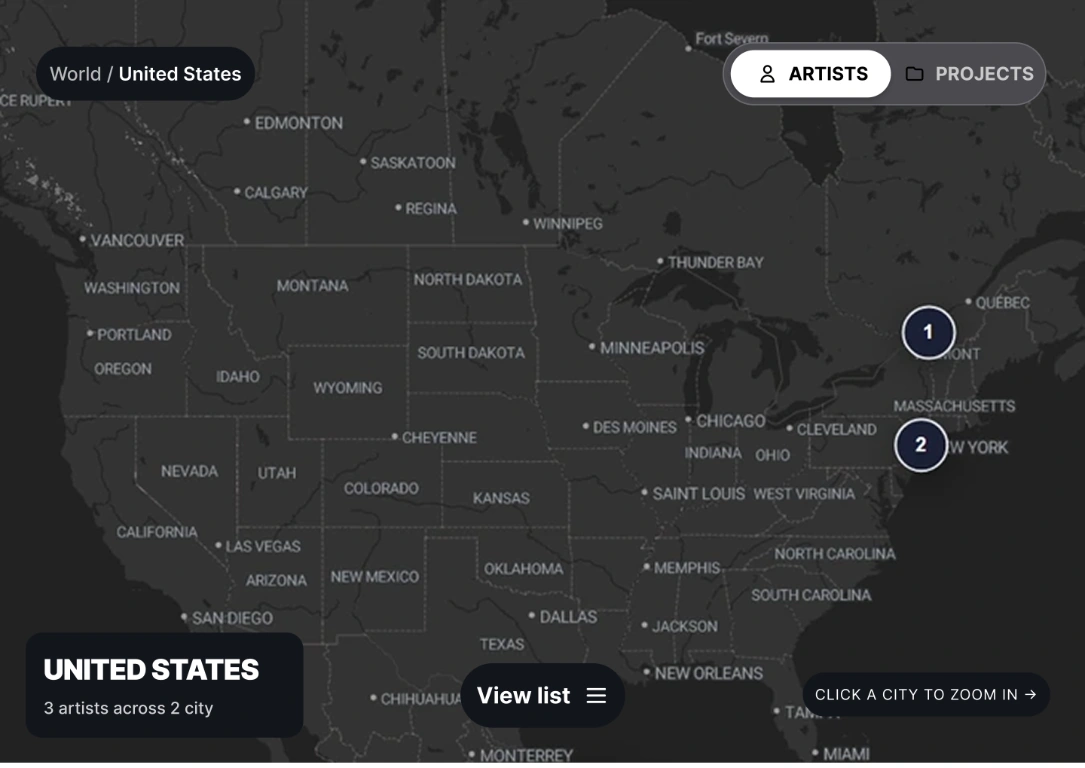
A live globe filtered by discipline, city, and availability a shortlist you can actually reason about.
Every marketplace treats discovery as a search bar. Geographic discovery treats it as a map, because where an artist works and where a client is hiring matters as much as what they make. It’s the one decision the rest of the product builds on.
02 Storytime
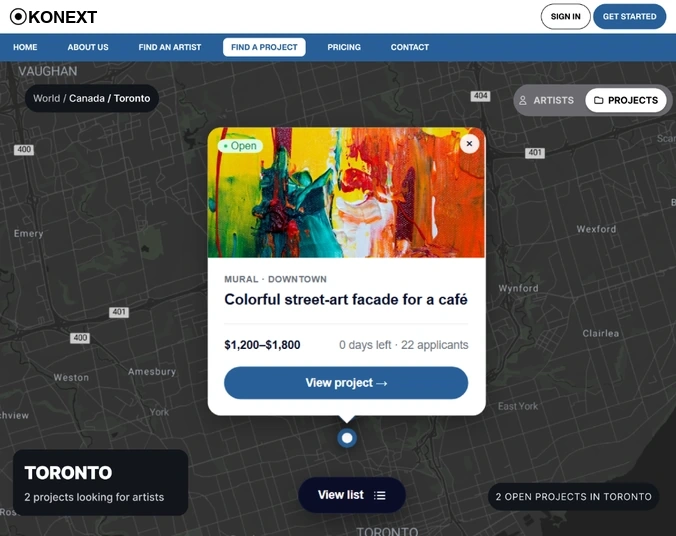
While traveling and painting murals, I found no site listing wall opportunities. In Vietnam, finding a wall meant asking around at my hostel, or digging through volunteer-exchange sites for a lead.
Hands-on audits of Upwork, Fiverr, Behance, and ArtStation showed portfolio hosting was solved. Discovery wasn’t.
72% of freelance creatives report being ghosted at least once (Leapers, 2025) the problem had real weight, not just a hunch.
Instead of another search bar, I rebuilt the whole product around a live globe. Everything else the tracker, the reviews followed from that.
Step into the Konext experience
03 Research
To find out what was actually broken, I used four approaches:
Approaches
Constraint #1
Competitive analysis
This is a self-initiated project: no internal team, no existing user base, no client stakeholders to interview.
Constraint #2
User interviews
No pool of freelance artists to interview directly, so research leaned on published industry surveys (Leapers) and hands-on competitor audits instead.
72%
of freelance creatives report being ghosted by a client at least once.
Leapers, 2025
18M+
registered users on Behance alone: portfolio hosting is already solved.
Behance
0/6
audited platforms combine geographic discovery with an application tracker.
Hands-on audit
04 Problem
72%
Ghosted at least once
Leapers, 2025
49%
Ghosted before kickoff
Leapers, 2025
0 / 6
Platforms combine geo + tracker
Hands-on audit
The qualitative picture was clear. The quantitative one confirmed it.
The product needed to stop being a list of profiles and start being a decision-making tool one that tells an artist whether it’s worth applying before they spend the time.
UX success criteria what I defined from research
A score shows fit before an artist spends time on a pitch.
Where a brief stands is visible without asking anyone.
A portfolio is built once never retyped for a second platform.
05 Solution
Before designing anything, I needed to sort out something more fundamental:
1No matter how well the discovery flow worked, if Konext held payments between artists and clients, it would need escrow licensing, dispute resolution, and compliance overhead more than a solo project can carry. A better UI on top of that model would still be the wrong foundation. I had to remove the problem, not design around it.
Konext stays connection-only. Verified profiles, mutual reviews, and a 3-tier subscription do the trust-building work an escrow layer would otherwise handle at a scale a solo designer can actually build and run.
The four states below are the core bet of the whole product each one replaces a moment that used to be pure silence with a clear, visible signal.
Each one is a specific interface decision, shown where it actually lives not described in the abstract.
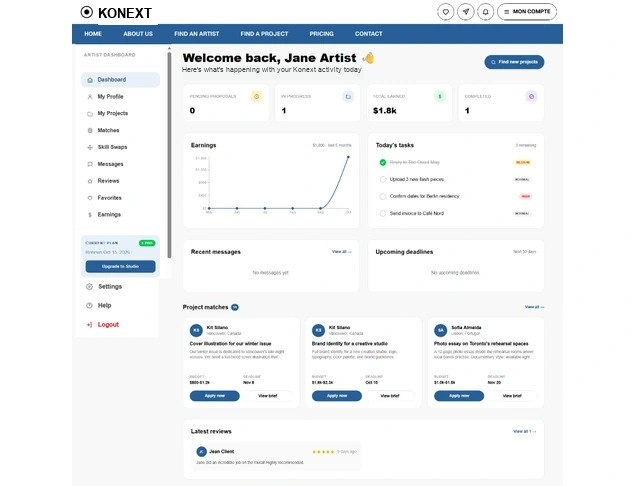
Earnings, active work and pending proposals give artists a quick status check. Tasks, deadlines and project matches then bring the most useful next actions into view.
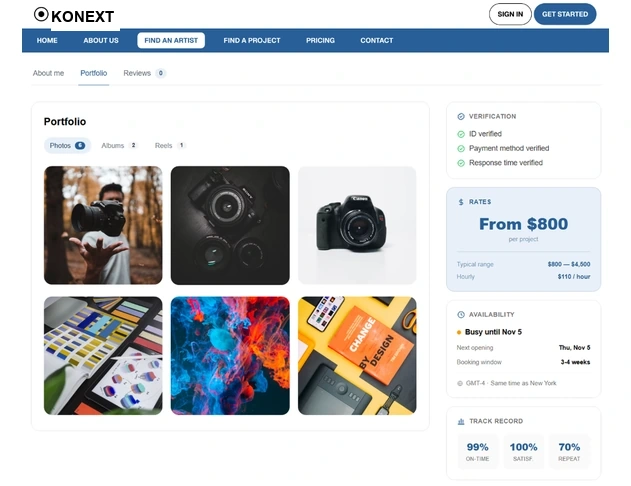
Artists use their portfolio to showcase their style, skills and range of work, helping clients quickly see whether their creative vision fits a project.
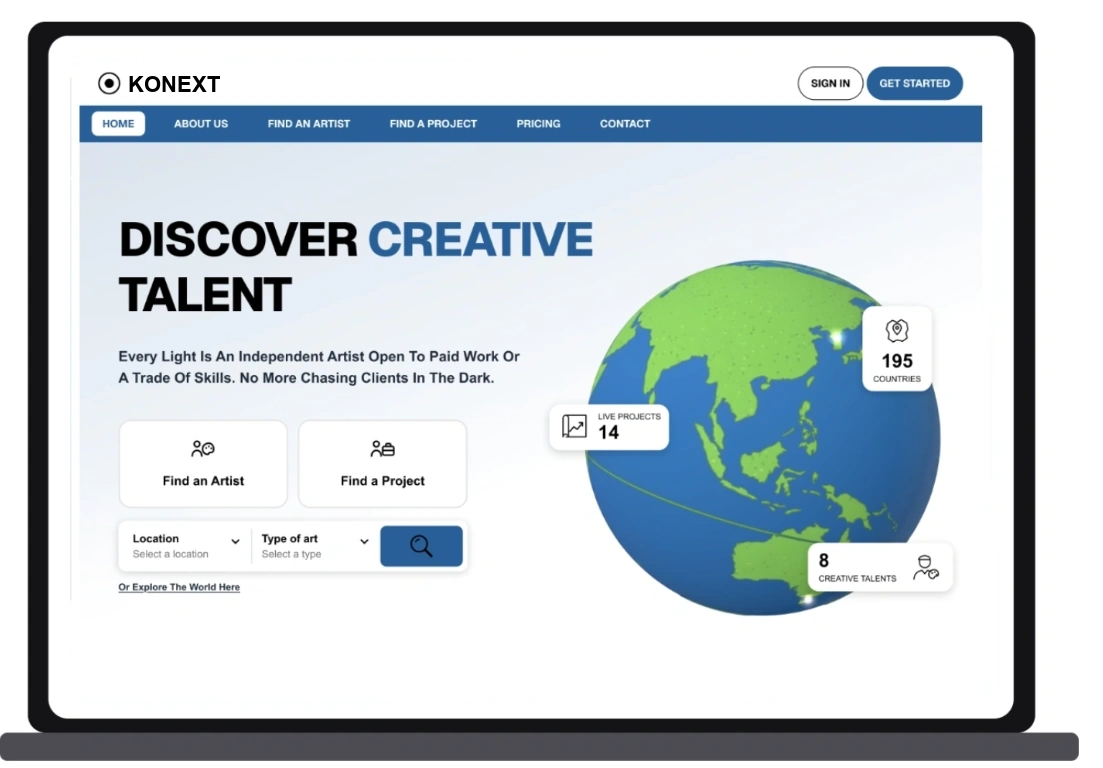
The live globe is the default landing view not a feed, not a list reinforcing the geographic bet from the very first screen.
06 Final design
Not a screen dump four places where a specific decision is visible.
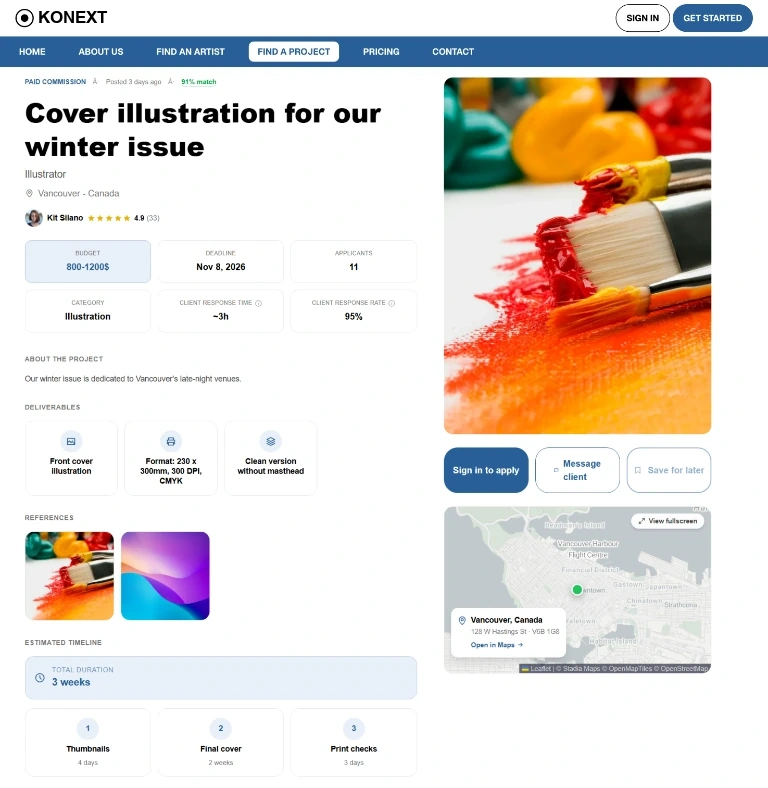
Budget, deadline, deliverables and client details help artists assess a brief at a glance. Clear application and messaging actions make the next step easy to take.
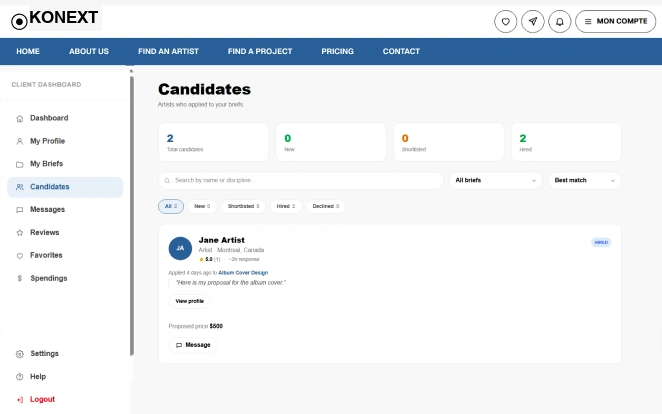
Status totals and filters help clients review applicants by progress, compare proposals and see who has been hired at a glance.
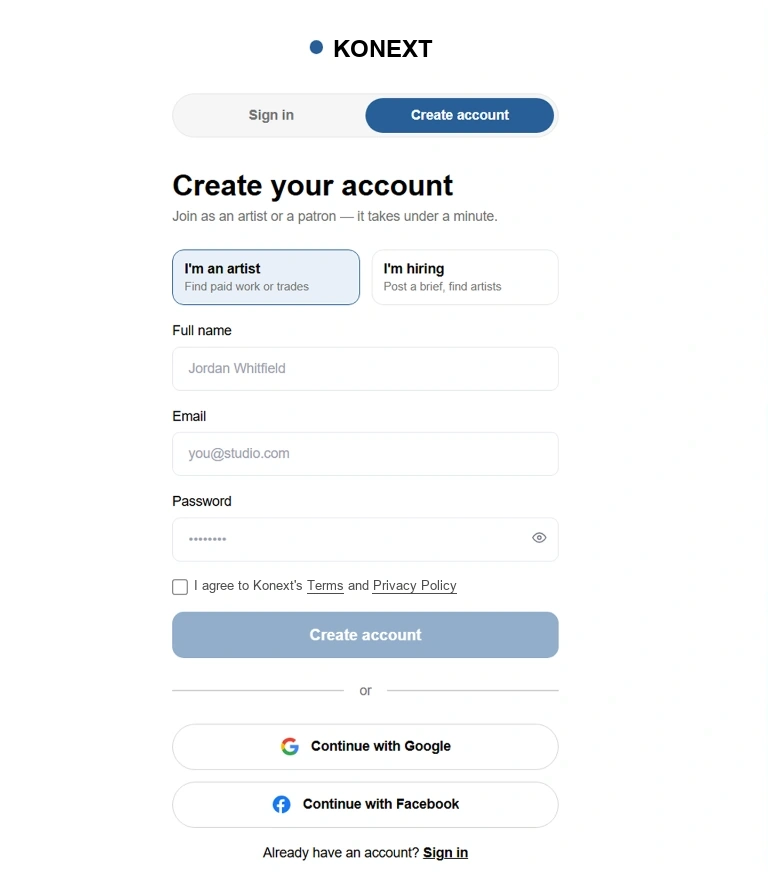
The first step lets people choose whether they are here to find paid work or hire talent, then keeps account creation simple and familiar.
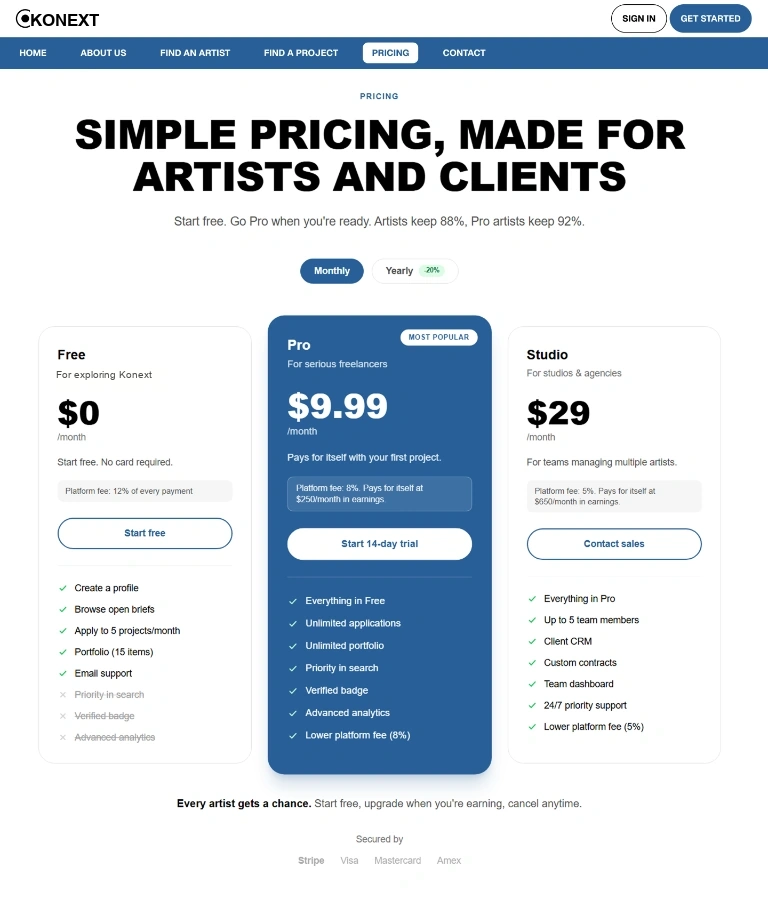
Side-by-side Free, Pro and Studio tiers make features and fees easy to compare, so artists and teams can choose a plan that fits their needs.
07 Impact
Konext hasn’t shipped publicly, so there’s no live data yet. These are targets set against the documented industry baseline not results I’m claiming.
Industry baseline: Leapers 2025 · Konext target
Every completed project, not opt-in
Industry baseline: Leapers 2025 · Konext target
The core bet the whole product is built on
These aren’t results they’re the targets the design was built against, each traceable to a specific decision above.
The figures above are projections, not measured outcomes. “Before” values come from the Leapers 2025 ghosting survey and the hands-on competitive audit. “After” values are design targets, not collected data Konext has no live users yet.
08 Learnings
Designed & built by Yoahn
Back to all work